

-
Kategorie
-
I/O
 Nützlich Liste der Suchwerkzeuge
-
Standard-Produkte
Nützlich Liste der Suchwerkzeuge
-
Wire-to-Board
Nützlich Liste der Suchwerkzeuge
-
Board-to-Board, Board-to-FPC
Nützlich Liste der Suchwerkzeuge
 Typ Eine weitere Auswahlkarte
-
FPC/FFC
Nützlich Liste der Suchwerkzeuge
Typ Eine weitere Auswahlkarte
-
RF/Koaxial
Nützlich Liste der Suchwerkzeuge
-
LWL-Steckverbinder
Nützlich Liste der Suchwerkzeuge
-
Modulare Stecker/Buchsen-Steckverbinder
Nützlich Liste der Suchwerkzeuge
-
Wire-to-Wire
Nützlich Liste der Suchwerkzeuge
-
IC-Karte/ IC-Sockel
Nützlich Liste der Suchwerkzeuge
-
Card Edge
Nützlich Liste der Suchwerkzeuge
-
Automotive
Nützlich Liste der Suchwerkzeuge
-
Leistung
Nützlich Liste der Suchwerkzeuge
-
Hoch-Geschwindigkeit
Nützlich Liste der Suchwerkzeuge
-
Abgedichtete Steckverbinder
Nützlich Liste der Suchwerkzeuge
-
I/O
-
Anwendungen
- Smartphoner & Tragba
- Intelligente Geräte
- PC & Tablet
- Andere Verbraucherausrüstung
- Autonomer Wagen
- Antriebsstrang (für Kraftfahrzeuge)
- Infotainment (für die Automobilindustrie)
- Verbundene Wagen
- Automobil-Beleuchtung
- Smart Grid
- Industrieautomatisierung
- Roboter
- Medical
- Telekommunikation/Netzwerk
- Datenspeicher
- Schienen/Güterverkehr
- Andere Industrieanlagen
- Büroautomatisierung
Kürzlich überprüfte Anwendung
-
Kategorie
-
I/O
Nützlich Liste der Suchwerkzeuge
-
Standard-Produkte
Nützlich Liste der Suchwerkzeuge
-
Wire-to-Board
Nützlich Liste der Suchwerkzeuge
-
Board-to-Board, Board-to-FPC
Nützlich Liste der Suchwerkzeuge
Typ Eine weitere Auswahlkarte
-
FPC/FFC
Nützlich Liste der Suchwerkzeuge
Typ Eine weitere Auswahlkarte
-
RF/Koaxial
Nützlich Liste der Suchwerkzeuge
-
LWL-Steckverbinder
Nützlich Liste der Suchwerkzeuge
-
Modulare Stecker/Buchsen-Steckverbinder
Nützlich Liste der Suchwerkzeuge
-
Wire-to-Wire
Nützlich Liste der Suchwerkzeuge
-
IC-Karte/ IC-Sockel
Nützlich Liste der Suchwerkzeuge
-
Card Edge
Nützlich Liste der Suchwerkzeuge
-
Automotive
Nützlich Liste der Suchwerkzeuge
-
Leistung
Nützlich Liste der Suchwerkzeuge
-
Hoch-Geschwindigkeit
Nützlich Liste der Suchwerkzeuge
-
Abgedichtete Steckverbinder
Nützlich Liste der Suchwerkzeuge
-
I/O
-
Anwendungen
- Verbraucher
-
Smartphoner & Tragba
Kürzlich überprüfte Anwendung
Empfohlene Anwendungen
-
Intelligente Geräte
Kürzlich überprüfte Anwendung
Empfohlene Anwendungen
-
PC & Tablet
Kürzlich überprüfte Anwendung
Empfohlene Anwendungen
-
Andere Verbraucherausrüstung
Kürzlich überprüfte Anwendung
Empfohlene Anwendungen
- Automobil
-
Autonomer Wagen
Kürzlich überprüfte Anwendung
Empfohlene Anwendungen
-
Antriebsstrang (für Kraftfahrzeuge)
Kürzlich überprüfte Anwendung
Empfohlene Anwendungen
-
Infotainment (für die Automobilindustrie)
Kürzlich überprüfte Anwendung
Empfohlene Anwendungen
-
Verbundene Wagen
Kürzlich überprüfte Anwendung
Empfohlene Anwendungen
-
Automobil-Beleuchtung
Kürzlich überprüfte Anwendung
Empfohlene Anwendungen
- Industrielle Maschinen
-
Smart Grid
Kürzlich überprüfte Anwendung
Empfohlene Anwendungen
-
Industrieautomatisierung
Kürzlich überprüfte Anwendung
Empfohlene Anwendungen
-
Roboter
Kürzlich überprüfte Anwendung
Empfohlene Anwendungen
-
Medical
Kürzlich überprüfte Anwendung
Empfohlene Anwendungen
-
Telekommunikation/Netzwerk
Kürzlich überprüfte Anwendung
Empfohlene Anwendungen
-
Datenspeicher
Kürzlich überprüfte Anwendung
Empfohlene Anwendungen
-
Schienen/Güterverkehr
Kürzlich überprüfte Anwendung
Empfohlene Anwendungen
-
Andere Industrieanlagen
Kürzlich überprüfte Anwendung
Empfohlene Anwendungen
-
Büroautomatisierung
Kürzlich überprüfte Anwendung
Empfohlene Anwendungen
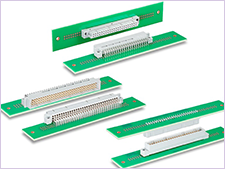
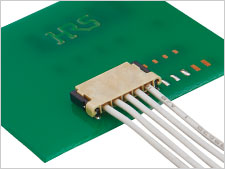
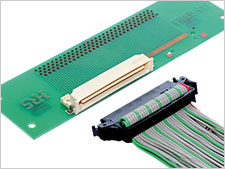
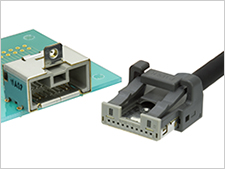
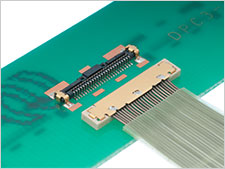
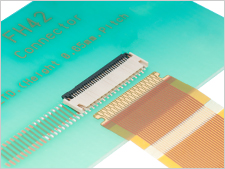





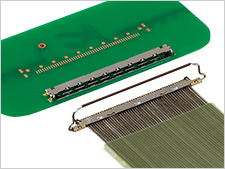
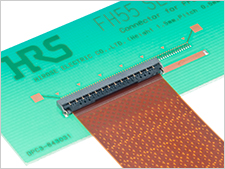

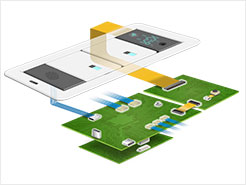
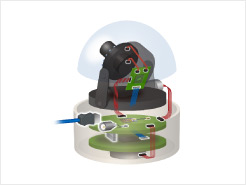

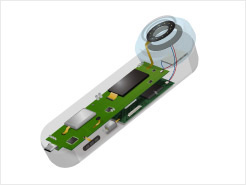
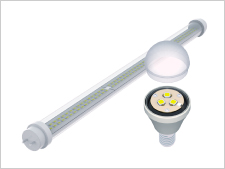
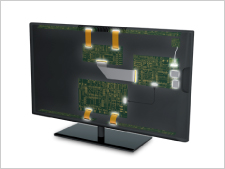
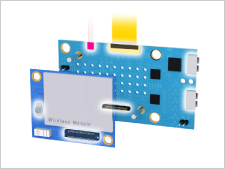

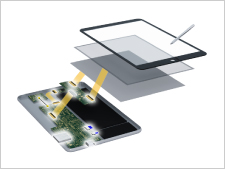
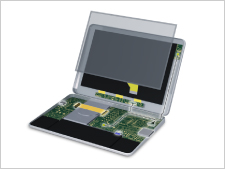









The Industry’s First Top & Bottom Independent Two-Point Contact,
0.5mm Pitch, 125℃*1 Heat Resistance
Back Flip FPC/FFC Connector for Automotive FH69 Series

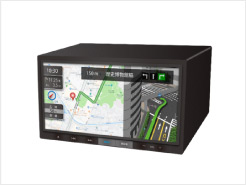
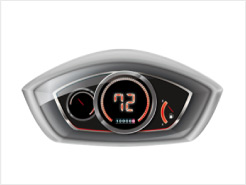
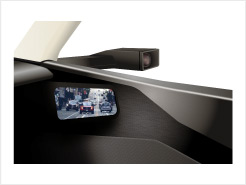
Recently, the number of vehicle displays installed is increasing due to the spread of in-vehicle applications such as electronic mirrors and rear seat monitors, as well as the shift to digital cockpits. FPC/FFC are generally used for display connection. In order to meet the board layout restrictions resulting from the increased number of displays, connectors that are resistant to upward FPC/FFC routing are required. In addition, products with both top and bottom contacts that can be connected regardless of contact direction are sought after when using general displays equipped with single-sided FPC/FFC.
Furthermore, in applications that are closely involved with automated driving, connectors for internal connections are required to have high automotive quality, such as 125℃ high heat resistance, high vibration resistance, and dust intrusion prevention, in order to improve electrical connection reliability.
In response to these needs, we have developed the FH69 Series, a back flip FPC/FFC connector series with automotive quality and the industry’s first top and bottom independent two-point contact design.
The heat-resistant material and a unique contact design ensures 125°C heat resistance* and high vibration resistance, making it a product that can be used with confidence even in harsh in-vehicle environments.
*1 The heat resistant temperature when using FFC is 105℃. When the heat resistant temperature of FPC/FFC is less than 125℃/105℃, the heat resistant temperature of FPC/FFC is applied.
Features
Top & Bottom Independent Two-Point Contact Design
Independent two-point springs contacts provide high contact reliability by ensuring that even if dust gets stuck in one contact point, the other contact point remains connected. In addition, with contact points on both the top and bottom of the connector, there are no restrictions on the FPC/FFC contact direction, so there is no need to use multiple connectors depending on whether the contact points are on the top or bottom side. This eliminates the need to use multiple connectors depending on whether the contact point is on top or bottom, enables free board design and reduces material management.
Even if dust is caught in one contact point, the other contacts remain in contact.

Universal Use Regardless of Contact Direction

Back Flip Design
A front flip design has the actuator on the mating port side, so there is a risk of unintentional opening due to stress during upward FPC/FFC routing. On the other hand, in the back flip design, the actuator is on the opposite side of the FPC/FFC mating port, which eliminates the possibility of the FPC being pulled upward during the assembly process and causing the actuator to open halfway.
Back Flip Design Resistant to Upward and Downward Routing
Back Flip Design*² :
Pulling the FPC upward does not open the actuator.

Front Flip Design*² :
The actuator may open when the FPC is pulled upward.

*² It does not allow for stress in both the upward and downward directions.
Good Insertibility and Incomplete Mating Prevention
The back flip design has an image of inferior FPC/FFC insertion operability when compared to the front flip design, which has an open mating port. However, the FH69 Series has a large mating port and ZIF (Zero Insertion Force) design that requires no insertion force and minimizes sliding stress on the pattern at the contact point for superior insertability.
In addition, if an FPC/FFC with tabs is used, the insertion status of the tabs can be seen even after the actuator is locked, preventing half-mating.
Good Insertability
- Wide FPC/FFC mating port for easy insertion
- ZIF design for less damage to contact points.

Incomplete Mating Prevention
- Can check insertion based on FPC/FFC tab visibility after actuator locking

Satisfies 125℃ Heat Resistance and Severe Automotive Requirements
Suitable material and spring design reduces displacement of contacts due to heat and maintain a secure connection. This makes the product suitable for use in 125℃ high temperature environments. It has been verified that there are no problems during the severe tests required for automotive devices, such as temperature cycle tests (-55 to +125℃, 1,000 cycles) and heat resistance tests (125℃, 1,000h).
| Item | Test Methods | Requirements | |
| Mechanical Characteristics | Vibration Resistance | Frequency 10 to 55Hz, half amplitude 0.75mm, 10 cycles in the 3 axial directions. | ① No Electrical Discontinuity 1μs min. ② Contact Resistance ③ Appearance |
| Shock | 981m/s², 6ms pulse duration 3 times in 3 axes and both directions | ① Contact Resistance ② Insulation Resistance ③ Appearance |
|
| Environmental Characteristics | Temperature Cycle | Temperature -55 → +15 to +35 → +125 → +15 to +35℃
Time 30 → 2 to 3 → 30 → 2 to 3 minutes. 1,000 cycles |
|
| Moisture Resistance | Exposed at +85±2℃, relative humidity 90 to 95%, 2,000h. | ||
| Temperature Humidity Test | Exposed at -10 to +65℃, relative humidity 90 to 96%, 10cycles for 240h. | ||
| Dry Heat | Exposed at +125±2℃ for 2,000h | ① Contact Resistance ② Appearance |
|
| Cold | Exposed at -55±3℃ for 1,000h | ||
| Corrosion Salt Mist | Exposed at +35±2℃, 5% in a salt water spray for 96h. | ||
|
Sulfur Dioxide |
Exposed at +40±2℃, relative humidity 80±5%, 25±5ppm. for 500h. |
||
|
Hydrogen Sulfide |
Exposed at +40±2℃, relative humidity 80±5% 10±15ppm. for 500h. | ||
Specifications
| Rated Current | 0.5A |
| Rated Voltage | 50V AC/DC |
|---|---|
| Operating Temperature | -55 to +125℃ *3 The heat resistant temperature when using FFC is 105℃. When the heat resistant temperature of FPC/FFC is less than 125℃/105℃, the heat resistant temperature of FPC/FFC is applied. |
| Contact Resistance |
Initial : 50mΩ Max. After the Test : 70mΩ Max. *4 Includes FPC/FFC Conductor Resistance (L=8mm) |
| Withstanding Voltage | 150V AC for 1 min. |
| Insulation Resistance | 500MΩ Min. (100V DC) |
| Mating Durability | 10 times |
- RoHS, Halogen-free*5Compliant
*5 This product satisfies halogen free requirements defined as 900ppm maximum chlorine, 900ppm maximum bromine, and 1500ppm maximum total of chlorine and bromine.
No of Pos.
Mass Production : 60pos.
Planned for Production : 10, 20, 30, 40 and 50pos.
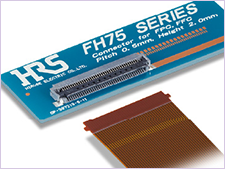
- The FPC/FFC patterns and board patterns of Hirose existing products such as FH28K, FH52K, FH75 and some other companies' products can be used, reducing the man-hours required for design changes during development and for selecting components for new development. For details, please contact us.
Applications (Use Case)
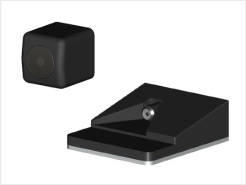
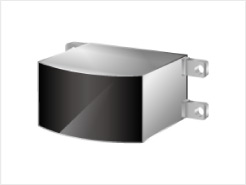
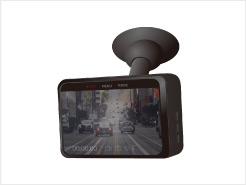
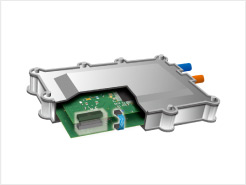
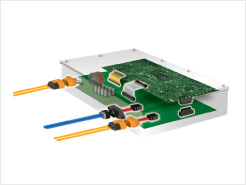
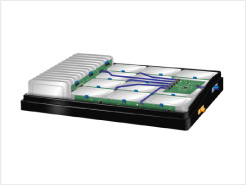
The FH69 Series, which provides high reliability through its two-point contact design and meets strict requirements for automotive including 125℃ high heat resistance, can be used for LiDAR, automotive cameras, car navigation/audio systems, and other industrial equipment with a harsh operating environment.


Click here for other recommended connectors for autonomous driving.


* In cases where the application will demand a high level of reliability, such as automotive, please contact a company representative for further information.
* The contents and specifications are subject to change.